

LHTTprojects.Goals and Research
M. Kačičnik
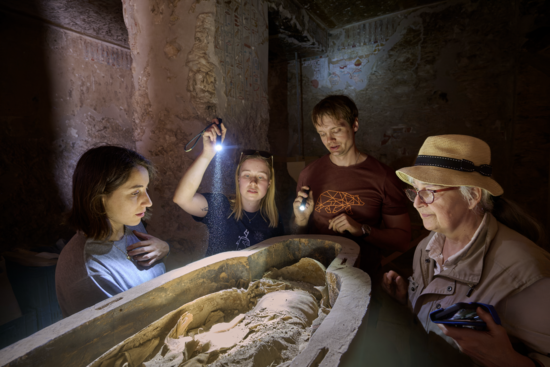
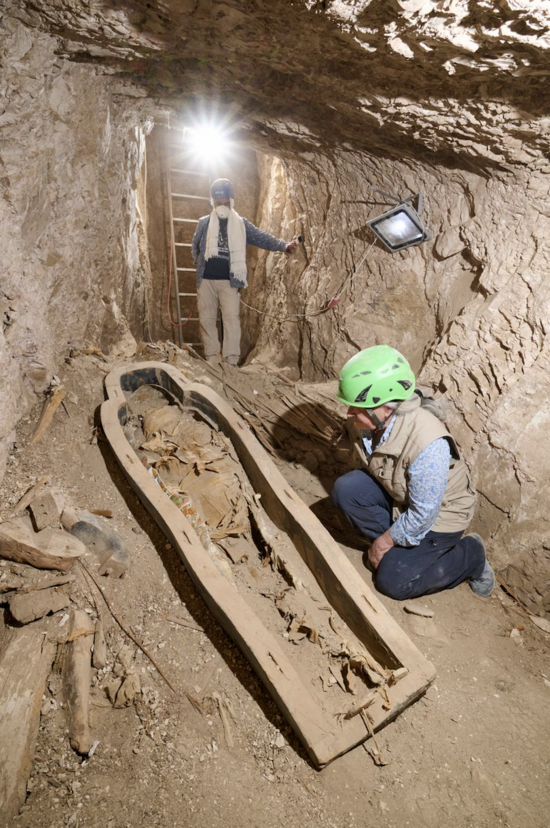
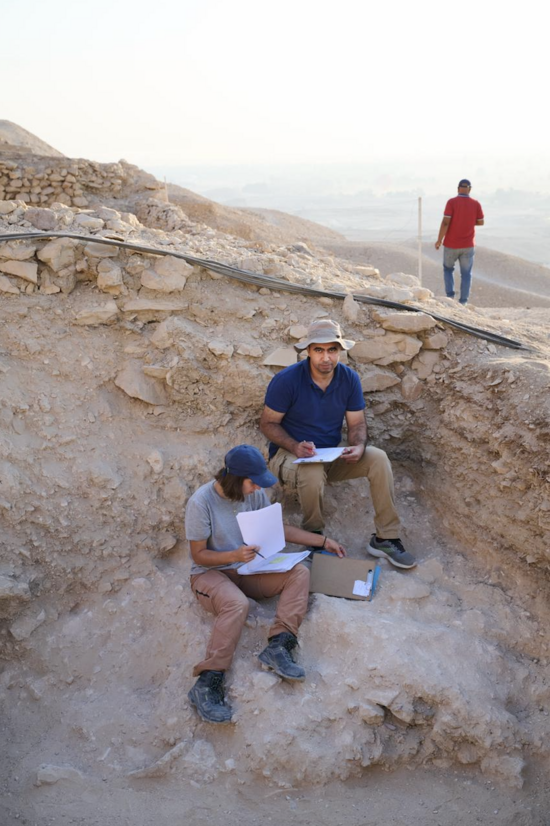
The project aims to document the various phases of use of the terrace tombs across more than three millennia, analyse them scientifically, and make them as publicly accessible as possible. On this basis, the site shall be reconstructed through its successive phases of use: from its construction in the New Kingdom, through the subsequent reuses, to its Byzantine/Coptic and modern use. The result is not a picture of a single monument but the continuous life story of a space used over thousands of years.
The work of LHTTprojects. follows an overarching transdisciplinary approach, which shows in its work and projects in both Switzerland and Egypt. Both combine scientific excellence with social responsibility, sustainable data management and engaging public outreach.
M. Kačičnik
Guiding question
How can the lived history of a Theban tomb complex be reconstructed from its material, epigraphic, geological and bioarchaeological traces, from its planning and construction through repeated appropriation, reuse and habitation to its modern investigation? And what does this reconstruction reveal about the people who shaped and lived in this space over more than three millennia?
The life history of tombs as a concept
How can the methodological approach of "life histories" be theoretically refined and turned into a model for Egyptological excavation and research more generally? The approach studies a tomb not as a single monument of one period but as a space repeatedly reused, reinterpreted and transformed over three millennia. What sets it apart from outdated tomb publications that focus on the construction phase?
Transdisciplinarity in practice
What concrete gain in knowledge comes from closely interlinking archaeology, epigraphy and bioarchaeology (IEM, University of Zurich and IPNA, University of Basel), compared with additive single-discipline studies carried out one after another? And where are the structural limits of such collaboration (data integration, different temporal resolutions, publication logics)?
Biographies from fragmentary evidence
How can individual or collective life histories of real people and groups (tomb owners, later burials, Coptic inhabitants) be reconstructed from a site's material traces without covering up the gaps and uncertainties in the sources with speculative narratives? These traces include burial remains, textiles, personal objects, names on shabtis and coffins, and evidence of craft and everyday activity. What methodological criteria distinguish a reliable biographical reconstruction from a merely plausible story?
M. Kačičnik

M. Kačičnik
Preservation versus investigation
In a long-term project like LHTT, what criteria should decide when a find or context is deliberately left untouched to keep it for future, more resource-intensive methods of investigation, and when the scientific gain from excavating it right away outweighs that? What ethical and heritage-conservation standards can be drawn from this for comparable excavation projects in Egypt?
From tomb complex to lived space
How does our understanding of a tomb complex change when we see it not mainly as a monument and burial place, but as a living space that was used, inhabited, worked in, and woven into everyday life over centuries, serving as a cult site, dwelling, workshop, and stable? What does this shift in perspective mean for how archaeological evidence such as hearths, weaving tools or traces of animal husbandry is read and turned into a coherent history of use?
Quick Links